
India has been elected unopposed to the United Nations Human Rights Council (UNHRC) for a three-year term beginning January 2026, reaffirming its global leadership and commitment to human rights, justice, and equality.
This marks India’s seventh term on the 47-member Council since its establishment in 2006. India last served on the HRC in 2024, completing two consecutive terms before taking a mandatory one-year break.
🕊️ India Wins Asia-Pacific Seat with 177 Votes
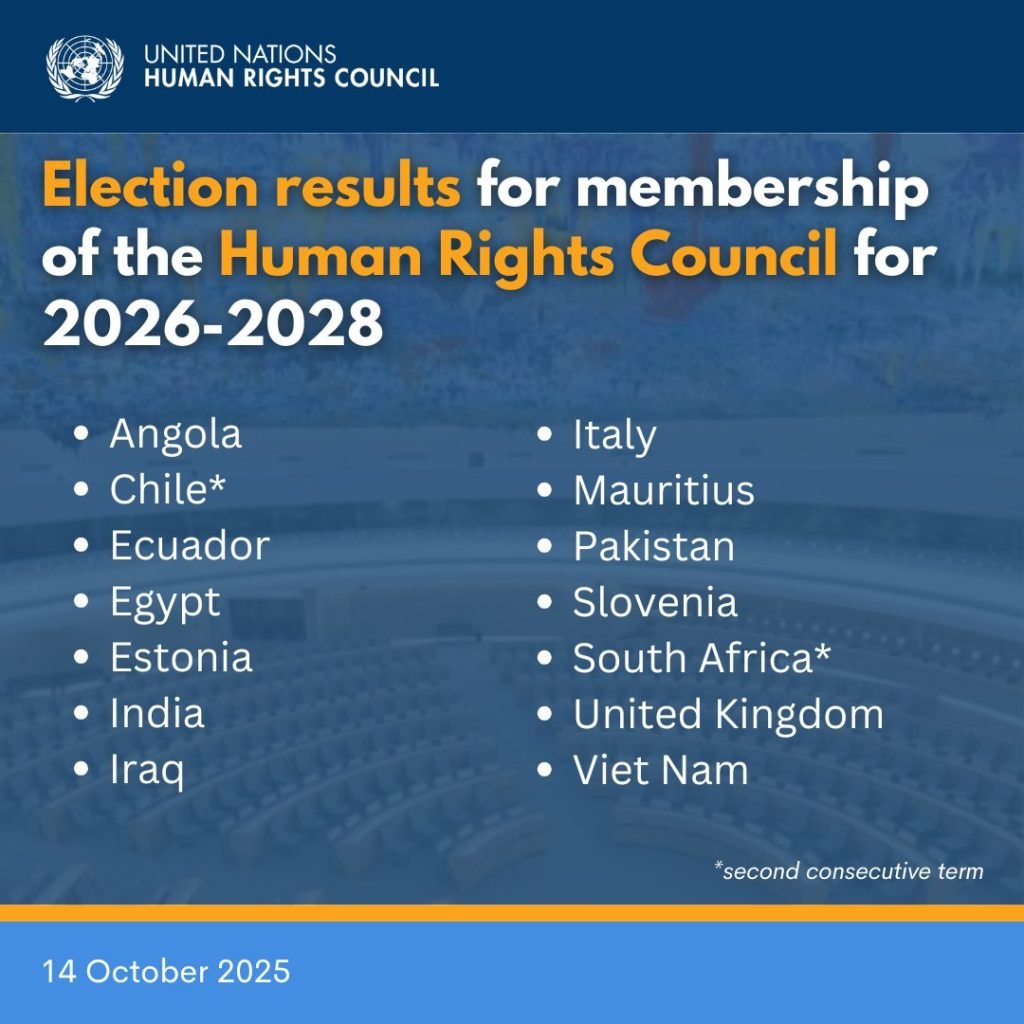
Elected by the UN General Assembly on Tuesday, India secured 177 votes out of 188 cast in a proforma ballot — despite running unopposed for one of the four Asia-Pacific seats available this cycle.
India’s Permanent Representative to the UN, Ambassador P. Harish, described the victory as a reflection of the country’s “unwavering commitment to human rights and fundamental freedoms.”
“This election reflects India’s steadfast commitment to promoting and protecting human rights globally. We look forward to serving this objective during our tenure,” Ambassador Harish said in a post on X (formerly Twitter).
🌍 “The World Is One Family”
In its official nomination statement, India emphasized that its candidacy represents its philosophy of inclusivity and bridge-building at a time when the international system faces deep divisions.
“India’s enduring philosophy of Vasudhaiva Kutumbakam — ‘The world is one family’ — underscores its unwavering commitment to global unity, openness, and mutual respect,” the statement read.
It further reaffirmed that India’s dedication to human rights is rooted in its Constitution, which guarantees fundamental freedoms and promotes justice, liberty, and equality for all citizens.
⚖️ Role and Responsibility at the UNHRC
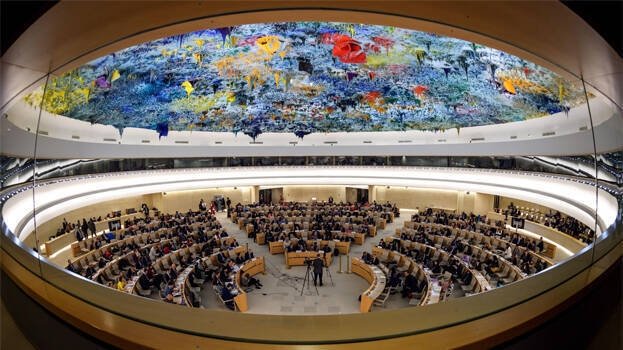
The UN Human Rights Council, based in Geneva, is the UN’s primary intergovernmental body responsible for promoting and protecting human rights worldwide. It reviews human rights situations in member states, facilitates dialogue, and provides a forum for addressing global issues of rights and justice.
The Council has 47 member countries, distributed by region, with 17 seats allotted to the Asia-Pacific group.
The other countries elected alongside India on Tuesday include Angola, Britain, Chile, Ecuador, Egypt, Estonia, Iraq, Italy, Mauritius, Pakistan, Slovenia, South Africa, and Viet Nam.
🤝 India’s Bridge-Building Role
India has pledged to act as a “bridge-builder” among member states, using its position on the HRC to foster dialogue, reduce polarization, and promote constructive cooperation in addressing human rights challenges.
“India’s election reaffirms the world’s confidence in our consistent and balanced approach — one that emphasizes cooperation over confrontation,” a senior diplomat said following the vote.
📜 India’s Track Record at the UNHRC
India has served on the Council during multiple terms since its inception — 2006–2007, 2011–2014, 2014–2017, 2017–2020, and 2021–2024 — making it one of the most active members from the Global South.
Its leadership has focused on inclusive development, gender equality, and the right to development, while advocating for respect for sovereignty and dialogue-based solutions to human rights concerns.
🏛️ What Is the UN Human Rights Council (UNHRC)?
The United Nations Human Rights Council (UNHRC) is the world’s premier intergovernmental body dedicated to promoting and protecting human rights globally.
Formed in 2006 by the UN General Assembly, the HRC is based in Geneva, Switzerland, and is composed of 47 member states elected on a three-year rotating basis. Seats are distributed by region to ensure balanced representation — with 17 seats reserved for Asia-Pacific nations, including India.
The Council’s key functions include:
- Reviewing human rights situations in all UN member countries through its Universal Periodic Review (UPR) process.
- Addressing violations and crises, from conflicts to systemic discrimination.
- Promoting dialogue and cooperation to strengthen the global human rights framework.
While it does not have enforcement powers, the UNHRC wields significant moral and diplomatic influence, shaping global standards and holding nations accountable for their human rights commitments.
🇮🇳 India’s Role at the UN Human Rights Council: Key Contributions So Far
India has been a consistent and constructive voice at the UN Human Rights Council (UNHRC) since its formation in 2006. Across six terms, New Delhi has championed a balanced, inclusive, and development-focused approach to global human rights.
Key Highlights:
- Dialogue over Division: India has often acted as a bridge-builder between developed and developing nations, advocating cooperation instead of confrontation.
- Right to Development: India has emphasized that economic growth and human rights go hand in hand, especially for nations in the Global South.
- Gender Equality & Women’s Empowerment: Through initiatives supporting education, healthcare, and livelihoods, India has advanced gender justice and dignity for all.
- Global South Leadership: India has spoken strongly for equity, fairness, and respect for sovereignty in human rights discussions.
Rooted in its constitutional values of justice, liberty, equality, and fraternity, India’s role at the UNHRC reflects its guiding principle of Vasudhaiva Kutumbakam — “The world is one family.” 🌍
India’s Key Contributions and Global Leadership at the UN Human Rights Council
From advocating the right to development to promoting dialogue-based diplomacy, India has played a bridge-building role at the UN Human Rights Council since 2006.
India Elected Unopposed to UN Human Rights Council, Pledges to Bridge Global Divides, India UNHRC 2025, India elected UN Human Rights Council, P Harish UN, Vasudhaiva Kutumbakam, UN Human Rights Council election.
India wins an unopposed seat on the UN Human Rights Council for 2026–2028, reaffirming its commitment to human rights, dialogue, and global cooperation under the philosophy of Vasudhaiva Kutumbakam.